


Samsung Galaxy S22 Case Guide: Fit, Protection and Style

03/11/2026

11 Mins

Is the thickest Samsung Galaxy S22 case the best protection? Usually not: start with a case made for your exact model, with a grippy edge and raised screen and camera protection. It should also let you charge, pay and use the buttons comfortably, otherwise you'll soon want to take it off.
Which Galaxy S22 Case Fits Your Model
A case labelled Samsung Galaxy S22 is intended for the standard handset, not the whole S22 range. The S22+ and S22 Ultra need their own cases because their bodies, camera arrangements and cut-outs differ.
Before You Buy
- Galaxy S22: Choose a case explicitly labelled for the standard Galaxy S22.
- Galaxy S22+: Buy an S22+ case, not a standard S22 cover.
- Galaxy S22 Ultra: Use an Ultra-specific case.
- Unclear listing: Don't order until the seller confirms the exact model.
Check the handset itself before trusting an old order confirmation or second-hand listing. Open Settings > About phone, then read the model name. A used phone advertised loosely as an S22 could in fact be another member of the family.
The dimensions below explain why those labels aren't interchangeable. Samsung's Galaxy S22 series specifications list the following handset sizes and show that Samsung's standard S22 silicone cover adds approximately 3.5 mm in thickness and 2.9 mm in width compared with the bare handset.
What Those Measurements Mean in Your Pocket
The standard S22 is compact, so a case makes a noticeable difference to how it feels. A cover that looks thin in a product photograph can still change how easily the phone slips into jeans or rests in your palm.
Don't stretch a smaller case around a larger handset or accept a loose fit because the camera opening looks close enough. The phone should sit fully inside the perimeter, without a corner lifting when you press the opposite edge.
If you're considering the Galaxy S22 Black 128GB Like New listing, match the accessory to that exact model name rather than searching only for Samsung cases.
Finish with these checks:
- Match the name: Read the model from the phone's settings.
- Compare the dimensions: Use the handset measurements above, not the case's external measurements.
- Read the compatibility wording: The listing should name your exact handset, not just the S22 family.
Case Types, Materials and Real Protection
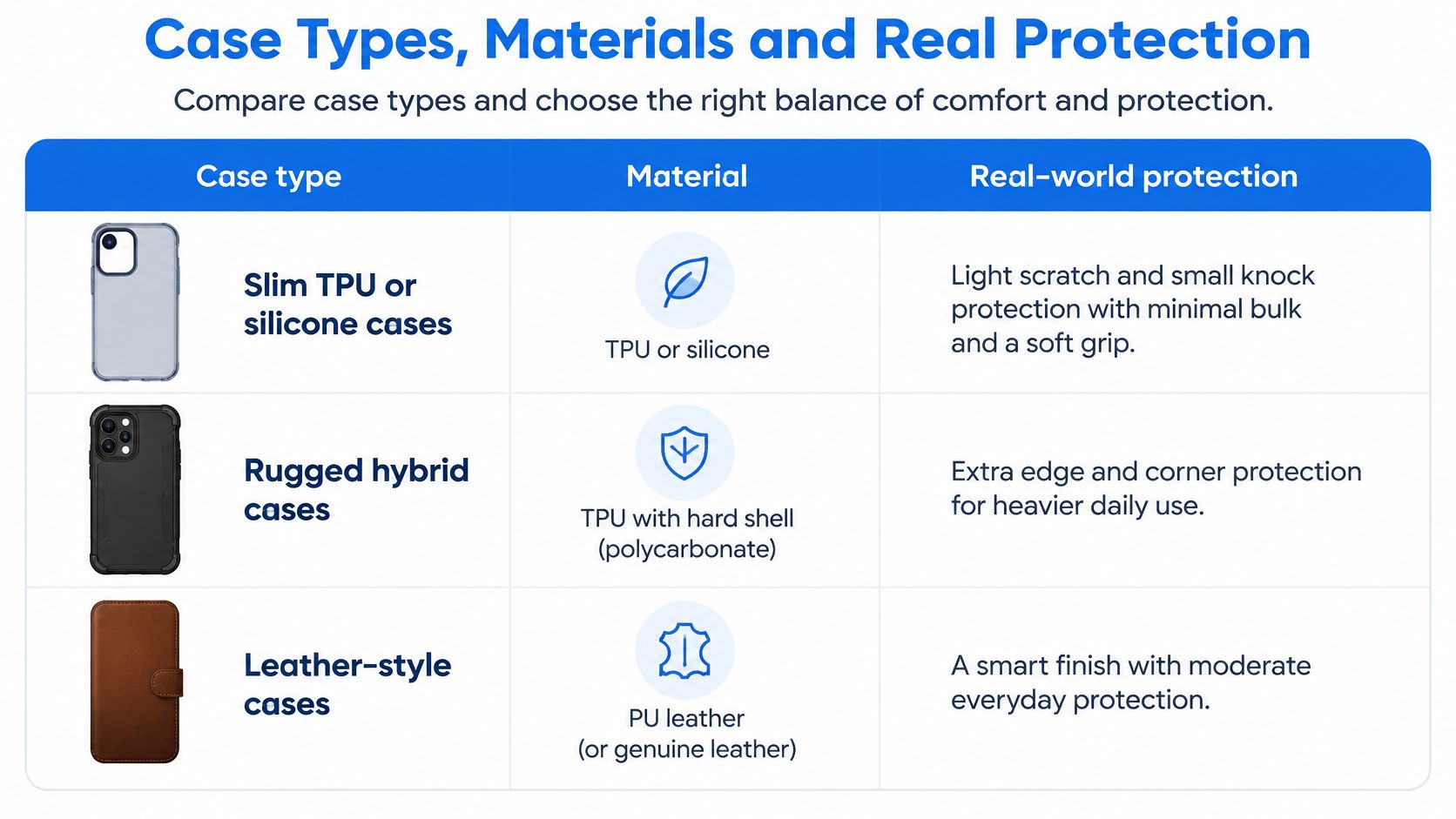
The material name is a starting point, not a guarantee. A well-shaped flexible case can be more useful than a hard shell with exposed corners and a slippery back.
Match the Construction to Your Routine
Slim TPU or silicone suits someone who mostly uses the phone at home or at a desk. Look for a snug perimeter and a surface you can grip without squeezing hard. Very soft, loose edges are less reassuring than a slightly firmer case that stays seated.
A polycarbonate shell with a rubberised frame is the sensible starting point for daily travel. The rigid section helps spread an impact, while the softer perimeter cushions the handset. Samsung's Protective Standing Cover uses that combination, and Samsung describes it as tested to military-grade standards.
Rugged multi-layer cases make sense around tools, outdoor work or frequent drops. However, more layers don't automatically mean better engineering. Check how the corners are constructed, whether the phone remains secure and whether the manufacturer explains its testing.
Folio and leather-style wallets protect the display from objects in a bag when closed. Their weak point can be the inner cradle, so inspect that rather than judging only the outer finish. A cover flap isn't a substitute for properly enclosed corners.
Clear hybrids are a reasonable compromise if you want the handset's colour visible. Choose the edge shape and grip first, then the appearance.
Look Beyond the Drop-Test Badge
The S22's glass front and rear need protection around the perimeter, not just a decorative panel across the back. A raised screen lip and camera surround help keep glass away from flat surfaces, although they can't prevent every impact against an uneven object.
For more examples of case construction and protection terminology, DigiDevice's protective phone case guide is a useful supplementary comparison. Treat any drop-test claim cautiously if the manufacturer doesn't explain the surface, height and test conditions.
Practical rule: Buy the least bulky case that properly addresses your daily risks, not the largest case you can tolerate.
The handset's IP68 rating doesn't become stronger when you add a normal case. Seams and openings remain, and a cover shouldn't be treated as waterproofing equipment.
Wireless Charging, Cameras and Daily Comfort
Test a new case while you can still return it. Fit isn't just whether the phone stays inside: the cover must work with your charger, payment routine, camera and everyday cables.
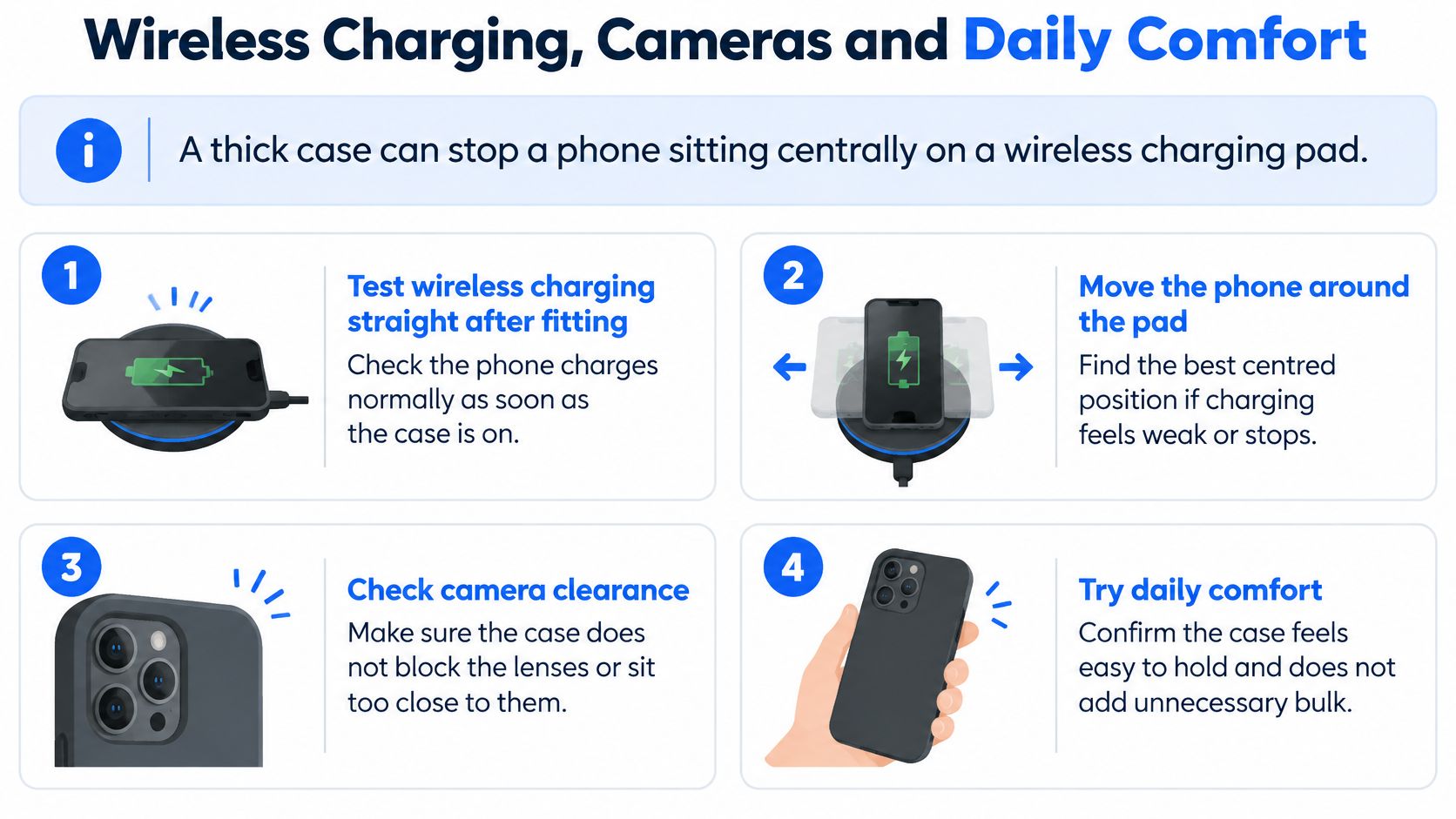
A thick back or raised attachment can stop the handset resting centrally on a wireless pad. Check that charging starts and continues, then reposition the phone if the connection is unreliable. Don't assume an initial charging symbol means the setup will remain dependable overnight.
How to Check a New Case, Quick Steps
- Inspect the seating. Confirm that every corner is enclosed and no edge of the case rolls away from the frame.
- Try wireless charging. Place the phone centrally, check that charging continues and adjust its position if necessary.
- Test contactless payment. Use the phone for a normal transaction, particularly if the cover contains a metal plate or card compartment.
- Check the cameras. Take photographs with each available camera view and check that the case doesn't intrude into the image.
- Press the buttons. The side and volume keys should respond distinctly without staying pressed.
- Connect your USB-C cable. The plug should seat fully without forcing it against the opening.
- Assess comfort and temperature. Hold the phone normally, then compare its charging behaviour with and without the cover if it becomes unusually warm.
Small Irritations Are Reasons to Change the Case
The camera rim should stand proud of the lens glass without crowding the lenses. Check separate lens protectors carefully: stacking accessories can create an awkward fit, collect dirt or affect photographs.
Metal accessories can interfere with charging or contactless use. Remove payment cards from a wallet cover before wireless charging, and don't trap a loose metal plate between the phone and charger.
If the handset becomes noticeably hot, stop charging and let it cool. Remove the case for a controlled comparison rather than assuming either the cover or the battery is definitely responsible.
A case can't prevent battery ageing, and it won't repair a damaged charging socket. A comfortable, moderately protective cover that stays on the phone is generally a better choice than an oversized one you keep removing.
Our Experience Refurbishing This Model at Used Mobiles 4U
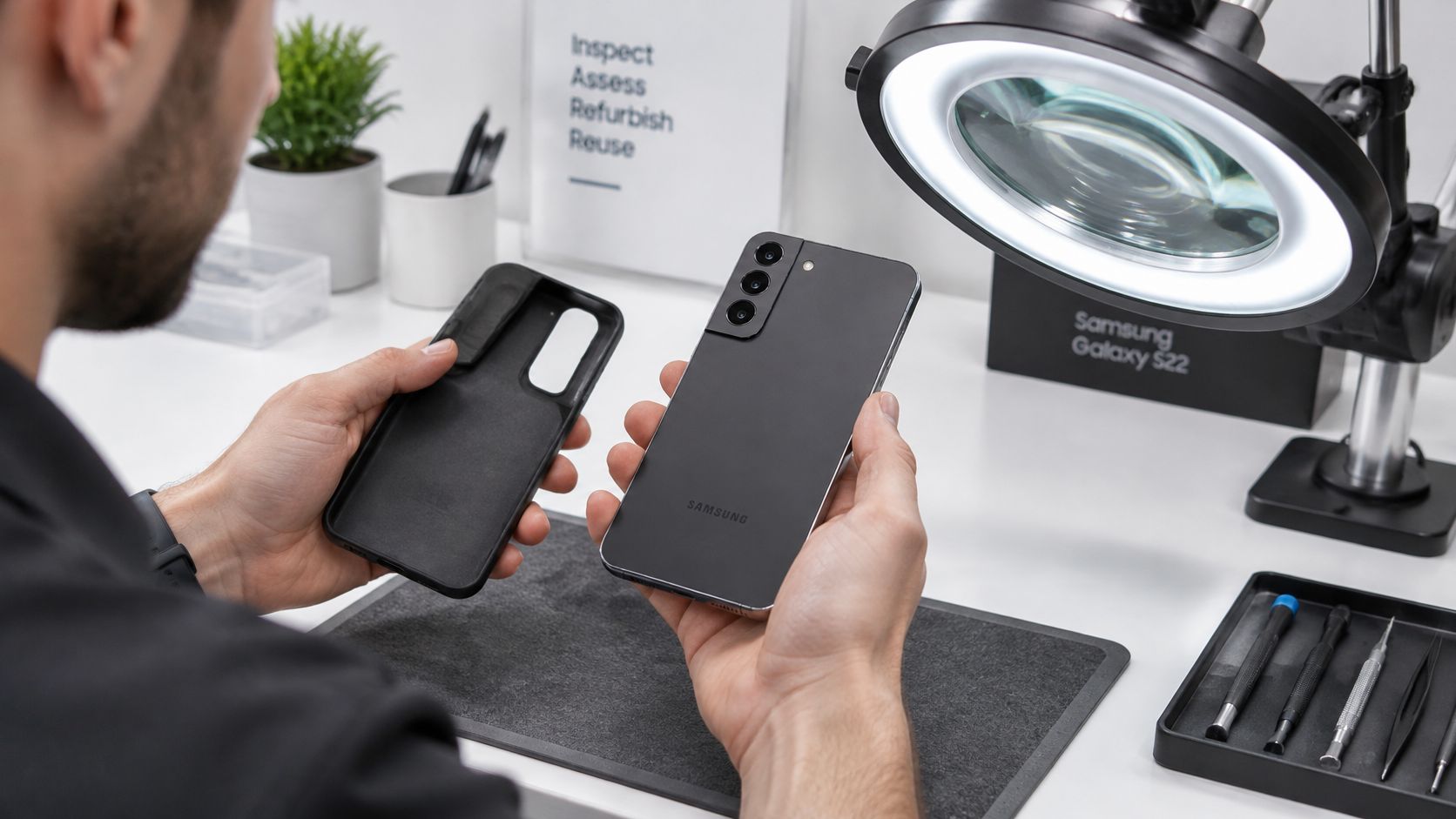
A case can hide frame dents, cracked rear glass and an uneven camera surround. That's why a refurbishment assessment needs to examine the bare handset rather than treating a tidy cover as evidence of good condition.
At Used Mobiles 4 U, our process includes functional testing, battery verification, cosmetic grading and final quality control. Devices requiring repair are repaired and retested, or removed from sale when they don't meet our standards.
What Matters on the Repair Bench
For an S22, the physical inspection should cover frame corners, rear glass, screen edges and the camera surround. Scuffed corners and worn side keys suggest substantial handling, but a loose back panel needs investigation rather than concealment.
Charging-port wear, rear-glass damage and battery condition are also worth checking. A cable that disconnects when moved needs diagnosis: compacted debris, a damaged cable and socket wear require different remedies.
Replacement parts should follow the diagnosed fault. A battery replacement won't resolve a damaged USB-C assembly, while replacing rear glass won't correct a distorted frame. There's no reason to replace working parts just because a handset is being refurbished.
Our eligible refurbished phones have at least 85% battery health at the point of sale. Warm charging alone doesn't prove a worn cell, so battery assessment should consider charging behaviour and practical runtime rather than a single symptom.
Cosmetic Wear Isn't the Same as a Fault
A higher cosmetic grade may need only a thin cover to preserve its appearance. More visible wear can be covered, but it should still be declared clearly before purchase.
Our guide to refurbished phone grades helps separate appearance from functionality. A case should protect the condition you chose, not disguise information you should have received.
Consider a typical repair decision: the rear glass is cracked, but the display, cameras, charging and battery remain sound. Repairing the glass and then fitting a suitable cover can make more sense than replacing the handset, provided the frame and repair quotation support that decision.
Don't use a case to hold a lifting back panel in place. If the battery may be swollen, stop using and charging the phone and arrange an assessment.
For buyers deciding between nearby models:
- Choose Galaxy S22 if: You value compact handling and want a phone that remains comfortable with a protective cover.
- Choose Galaxy S22+ if: A larger screen matters more than pocketability, and you're comfortable with the larger handset once cased.
For most customers prioritising easy daily handling, I'd keep the standard S22 rather than move up solely for size.
What Buyers Usually Ask Us
A replacement case isn't automatically an upgrade. If your existing cover fits securely, isn't split and still protects the edges, keeping it may be the more sensible purchase decision.
- Does a case affect my rights? Using a case doesn't remove your statutory rights against the retailer, although accidental damage and an underlying fault are different issues.
- Can a clear case yellow? Yes, some clear materials discolour with use and exposure, so check material information rather than relying on the fresh product photograph.
- Is a wallet case worth it for cards? Yes, if carrying fewer separate items matters to you, but check the inner cradle and avoid overfilling the pockets.
- Should I buy a case for a refurbished S22? Usually yes, because a serviceable handset deserves protection regardless of whether you bought it new or refurbished.
- Should I replace a scratched case? Not for appearance alone, but replace it if corners have split, the fit has loosened or the handset can work free.
- Can I put an old case in electrical recycling? Don't assume so: a passive phone cover isn't the same thing as the electrical device it protected.
- Will changing my SIM affect case choice? No, but remove the cover when accessing the SIM tray; for separate setup advice, Samsung tips for Simsima eSIM users may help with the phone's network settings.
Give the Old Cover a Practical Exit Route
Start with reuse. Clean a sound case, check it still fits securely and pass it on with a compatible handset if someone wants it.
If it's no longer usable, identify whether it's a single material or a bonded mixture of plastic, fabric, magnets and metal. Don't force apart glued layers with sharp tools just to make them look recyclable.
- Check council guidance: Confirm whether the specific material is accepted locally.
- Check retailer take-back: Read what the scheme accepts before posting or dropping anything off.
- Separate only removable parts: Follow the disposal scheme's instructions rather than guessing.
- Avoid unsupported eco claims: A new environmental label doesn't make replacing a functional cover necessary.
The UK government's electrical-waste guidance and datasets provide the official electrical-waste context, but aren't blanket permission to put mixed-material cases into a phone recycling bin.
If you're still deciding which handset to keep, our refurbished Samsung buying guide can help you settle that question before ordering accessories.
Choose the Right Samsung Galaxy S22 Case and Keep the Phone Protected
For most owners, I'd choose a polycarbonate-backed case with a flexible, shock-absorbing perimeter. It's a sensible balance for commuting, family use and the occasional dropped phone, without turning a compact handset into something awkward to carry.
Choose a more substantial rugged design when your working environment warrants it. Avoid buying one merely because it looks tougher, especially if you value a slim pocket fit or rely on a wireless charging stand with limited clearance.
A replacement cover is worth buying when the old one no longer stays secure. Replacing the handset is a separate decision, best based on faults, battery condition, repair feasibility and whether the phone still meets your needs.
Protection and Consumer Rights Are Separate
A case helps reduce accidental damage; it doesn't replace the retailer's responsibilities. The UK government's consumer-rights guidance explains the 30-day short-term right to reject faulty goods for a full refund, followed by applicable repair or replacement rights, with necessary repair or replacement costs borne by the trader.
That protection is separate from a manufacturer's warranty. It also doesn't mean that damage caused by dropping the phone becomes a retailer fault because a case was fitted.
Every phone we sell includes an 18-month device warranty and 12-month battery cover. Keep your order details and report a suspected fault clearly, describing what happens and when, rather than trying to conceal or work around it with another accessory.
Make the Purchase in the Right Order
- Identify the handset: Confirm the exact model before spending money on accessories.
- Choose for your routine: Prioritise the protection you need rather than collecting features you won't use.
- Test the complete setup: Use your normal charger, cable, camera and payment method while a return remains straightforward.
- Keep or pass on what still works: Replace an old cover because it's no longer suitable, not just because you've seen a new design.
If you're weighing repair against another handset, use our Samsung Galaxy S22 price guide to frame the comparison, then check the actual condition and repair requirements. A cheap-looking repair can become poor value if other faults also need attention.
The verdict is straightforward: a correctly fitted Samsung Galaxy S22 case is worth buying for a sound handset. It suits anyone who wants to preserve a useful phone, while oversized rugged covers are best avoided by buyers who won't comfortably use them every day.
Written by James Waterston, with 24 years in the mobile phone industry, from customer service through to Sales Director of a global repair and recycling company. Now running Used Mobiles 4U for over 8 years. Connect with James on LinkedIn.
Meta description: Choose a Samsung Galaxy S22 case with the right fit, grip and protection. Get practical UK advice on charging, refurbished phones and reusing old cases safely.
Used Mobiles 4 U offers professionally tested, SIM-free refurbished Samsung phones with clear grading and free UK delivery. Visit Used Mobiles 4 U, check the handset's grading and battery details, then choose a case that suits how you'll use it.
Looking for a refurbished phone?
Shop professionally tested refurbished iPhones and Samsung phones with 18 month warranty, 30 day returns and free UK delivery.
Browse Refurbished Phones