


Where to Sell Your Broken Phone: A Practical UK Guide

11/10/2026

11 Mins

A broken phone can still be sold in the UK if it powers on or has a repairable fault. If it has a swollen battery, serious water damage, a dead mainboard or an account lock, authorised recycling is usually safer than chasing a tiny payout.
The phone on your desk may have a cracked screen, a battery that barely lasts or a charging port that needs cable-wiggling. That doesn't automatically make it worthless. It does mean the right route depends on the exact fault, the phone's model and whether you want the quickest exit or the highest net return.
A Straight Answer on Selling a Broken Phone in the UK
Start with a specialist buyback or refurbishment quote if the handset switches on, charges and has a repairable fault. A cracked display, tired battery, faulty camera or worn charging port can still leave useful parts and resale value. If the board is dead, the phone is locked, or the battery is swollen or unsafe, choose an authorised electrical recycling route instead.
A practical rule is simple:
- Repairable and powered on: get a faulty-device quote before paying for a repair.
- Repairable but expensive: compare the as-is offer with the likely value after repair, including labour and parts.
- Unsafe or severely damaged: don’t post it until the recipient confirms its lithium-battery and water-damage rules.
- Locked or unable to reset: use only a buyer that documents secure data handling or storage destruction. Our Sell Your Tech service is one route to check alongside local recycling options.
The UK has a large pool of unused phones. A 2022 Virgin Media O2 study of 2,000 UK adults estimated that households held almost 15 million unused mobile phones, with phones making up 23% of unused electrical items in that survey. The same study found that 25% didn't know where their nearest electronic-waste recycling point was, which helps explain why many handsets sit in drawers rather than entering a reuse route. The UK findings on unused phones and recycling access make the point clearly: knowing where to sell your broken phone is often as important as knowing what the fault is.
Which UK Route Fits Which Fault
The fault matters more than the word “broken”. A cracked screen on a working iPhone is a different proposition from a Galaxy with a swollen battery, and both differ again from a handset that won't boot.
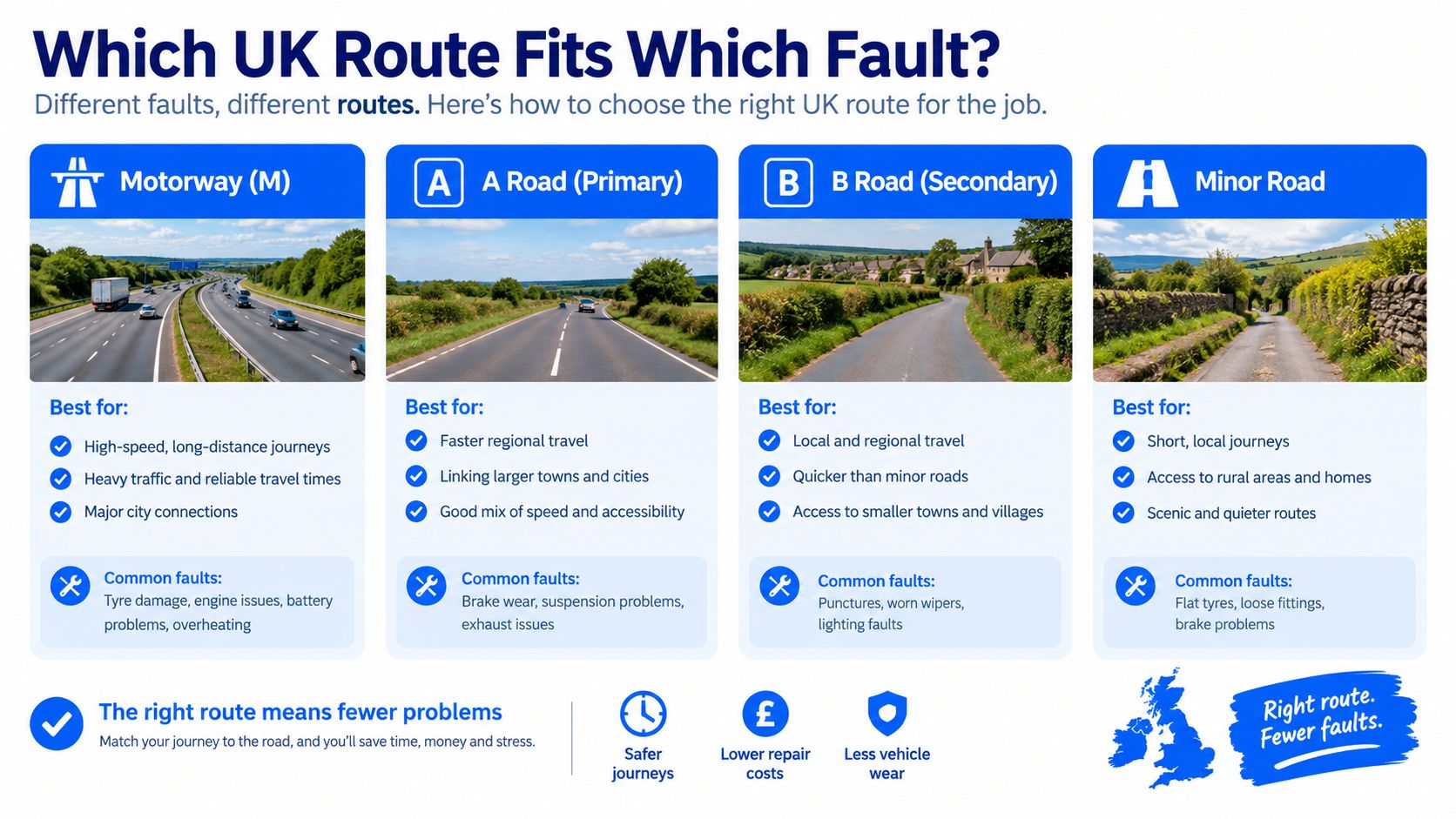
- Cracked screen: use a specialist buyback or refurbishment channel when touch, cameras, biometrics and the board work. Repair first only when the repair cost leaves a clear financial advantage.
- Weak battery: obtain an as-is quote if the phone remains usable. A normal worn battery is different from a swollen cell, which shouldn’t be posted without approval.
- Faulty charging port: clean and test it before assuming the port has failed. If wireless charging or another cable confirms a port fault, a refurbisher may recover value through repair.
- Water damage: disclose it fully. Corrosion can spread and many buyers will reduce the offer or reject the device, making authorised recycling the sensible fallback.
- Won’t switch on or is locked: don’t assume the phone is data-free. A dead handset may still contain accessible storage, while an iCloud or Google lock limits legitimate reuse. Use a specialist parts route or documented recycling.
A repair shop may pay more for a phone with a good board and damaged modules than for a cosmetically tidy phone with corrosion. If the handset is locked, remove the account only if you can do so legitimately. For a device you can't access or reset, the UK-specific guidance on recycling locked or iCloud-blocked phones is more useful than a generic marketplace listing.
The Five Main Routes UK Sellers Actually Use
A specialist buyback service is usually the cleanest option for a working or repairable handset. You describe the model and fault, receive a valuation, send the phone for inspection and accept the adjusted offer or have it returned under the buyer's terms. Check whether “faulty”, “broken” or “for parts” devices are accepted before you post.
Network and retailer trade-ins are convenient, particularly when you're replacing the phone at the same time. They can be less suitable for dead or heavily damaged devices, and a trade-in credit isn't always as useful as cash. Read the condition rules rather than selecting the nearest description.
Repair-for-resale is worth considering for a higher-value iPhone or Samsung with one clear fault. Don't pay for a screen, battery or port replacement until you've compared the phone's current faulty value with its likely resale value after repair. Parts buyers make more sense when the board, cameras, housing or display can be harvested even though the handset won't be sold as a complete phone.
Authorised recycling is the correct destination for devices that are unsafe, beyond economical repair or rejected by reputable buyers. UK WEEE arrangements depend on the relevant local-authority facility and the equipment it accepts, so check before travelling or posting. The UK government's WEEE information explains why reuse and electrical-waste disposal shouldn't be treated as the same downstream process.
If you manage several company handsets, keep records of serial numbers, account removal and data wiping. These Apple trade-in tips for IT managers are useful because business devices create extra account, audit and handover checks. For individual sellers, the same principle applies: get clear terms before sending anything.
For selling an iPhone privately, remember that a marketplace listing creates work and risk. You must photograph the fault, answer questions, handle payment and deal with disputes. Our guide to selling a used iPhone in the UK compared with eBay is worth reading before choosing convenience over control.
What Actually Affects the Offer You’ll Get
A buyer doesn't value a broken handset by appearance alone. The model, storage capacity, age, demand and repair route all affect what remains after testing, parts and handling are considered.
The most important variables are:
- Fault type: a replaceable screen or battery is easier to assess than corrosion or a dead board.
- Functionality: a phone that boots, charges and unlocks gives the buyer more ways to test and reuse it.
- Battery health: a worn battery reduces working value, while a swollen cell changes the safety decision completely.
- Storage and model: newer, popular phones and higher-storage versions generally retain more value than older, lower-demand handsets.
- Network status: SIM-free or unlocked phones are easier to reuse. Tell the buyer if the phone is network-locked.
- Original parts and history: replacement displays, missing biometric function and previous repairs may affect grading.
- Honest description: a hidden fault often leads to a revised offer, rejection or return. Accurate information gives you a more useful quote.
Offers vary by grade, storage, battery health, cosmetic condition, warranty expectations and availability. A faulty phone will usually attract less than a working equivalent because the buyer carries the repair, testing and return risk. Don't compare an instant faulty-device quote with a private-sale asking price and assume the difference is profit.
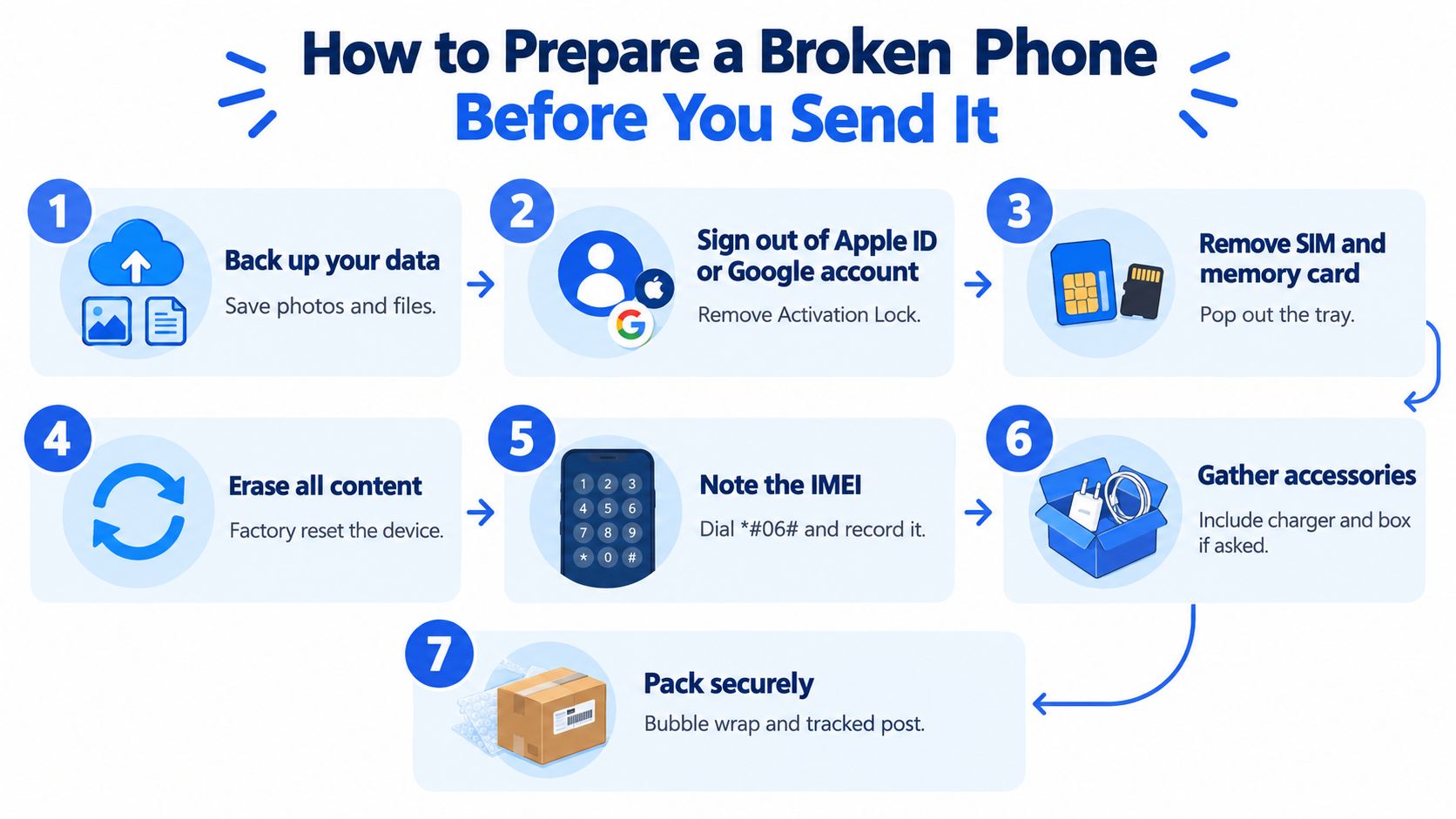
How to Prepare a Broken Phone Before You Send It
Preparation protects both your data and your valuation. Take photographs of the phone before packing it, including the screen, rear housing, frame, model label and any visible damage.
- Back up first: save photographs, contacts, messages and files to your normal Apple, Google or computer backup. A reset can permanently remove them.
- Sign out of accounts: remove your Apple Account or Google account and disable Activation Lock or equivalent device protection where possible.
- Remove the SIM and memory card: take out the SIM and microSD card. Don’t leave personal contacts or stored files in the tray.
- Erase the phone: use the manufacturer’s reset process. On an iPhone, use “Erase All Content and Settings”; on Android, use the built-in factory-reset option after account removal.
- Record the IMEI: use Settings where available or dial *#06# on a working handset. Keep the IMEI, serial number and your photographs for your records.
- Describe the fault: say whether it boots, charges, unlocks, makes calls, responds to touch and shows signs of liquid damage. Mention network locks and previous repairs.
- Pack it safely: use protective packaging and tracked post. Guidance on packing fragile items in the UK is helpful for preventing avoidable transit damage.
Don't post a phone with a swollen, hot, leaking or badly damaged lithium battery until the recipient confirms it can accept it. A damaged cell can create fire and transport risks. The same caution applies to a burned, crushed or severely water-damaged handset.
If the phone won't power on, don't treat it as wiped. Remove the SIM and memory card physically, then send it only to a buyer that explains whether storage is overwritten, reused or destroyed. For a useful reset checklist, see our guide to wiping data before trading in an old phone. The UK National Cyber Security Centre explains that a normal manufacturer reset removes personal information, and that encryption keys can make residual data unreadable on encrypted devices. If secure reuse isn't possible, physical storage destruction provides stronger control.
What We See on the Bench at Used Mobiles 4U
Our technicians regularly see cracked screens caused by drops without a case, worn charging ports from constant cable use and older Samsung Galaxy phones with batteries that have started to swell. Water-damaged phones often arrive after being left in a pocket or bag, already showing corrosion around the charging area.
The first decision isn't cosmetic. We check whether the board is clean, whether the housing is straight, whether the display and touch layer respond, and whether cameras, speakers, microphones, charging and biometrics work. We also look for liquid indicators, previous repair marks, missing screws, adhesive damage and signs that a non-original part has affected Face ID or fingerprint function.
Bench rule: a phone with one replaceable fault may be worth repairing, but a phone with several unknown faults usually belongs in the parts or recycling pile.
A common example is a customer offering an iPhone with a smashed display and a worn battery. We test the board and security functions first, then compare the likely cost of both repairs with the value of a correctly graded refurbished device. If the housing is bent or the board has liquid damage, fitting new parts won't turn it into a dependable resale phone.
Grade matters after repair. Heavy frame marks, screen burn, camera dust and a tired battery can move a handset into a lower grade even when it works. Nearby models can also change the decision: a well-supported iPhone or popular Samsung Galaxy may justify parts and labour, while an older Android phone with low demand may not.
Why Leaving It in a Drawer Is the Worst Option
Keeping a broken phone “for later” feels harmless, but it removes it from the reuse system and doesn't protect its data. A device left untouched can still hold photographs, messages, saved passwords, banking access, authentication apps and work email. If someone eventually gives it to a child, sells it informally or puts it in household rubbish, the owner may have lost control of both the phone and the information inside it.
The scale of the problem is clear in UK research. A 2025 WWF report estimated that 12 million unused mobile phones were stored indefinitely in UK homes. It also estimated that 810 tonnes of mobile-phone waste, approximately 11.1 million phones, entered the UK municipal solid-waste stream in 2020. WWF's Fast Phone report connects the drawer problem with the wider waste problem.
The behaviour behind those figures matters. In a survey of 1,882 respondents, only 10% said they'd recycle a phone when they no longer needed it, while more than 60% said they'd keep or donate it. Just 3% reported using a mobile-phone recycling service. Those figures don't mean every stored phone could have earned a meaningful payout, but they do show how often owners postpone a decision.

Delay reduces your options
A working phone with a cracked screen can often be tested, repaired and resold. The longer it sits unused, the greater the chance that the battery deteriorates, the charging port collects debris, or a small fault becomes harder to diagnose. Market demand also changes, so an older model may become less attractive to refurbishers even when the original damage hasn't changed.
That doesn't mean you should rush into the first online quote. It means you should make a decision while the handset's condition is clear. Get an as-is valuation, ask what happens if inspection finds extra damage, and compare the net result after postage and any return risk.
Virgin Media O2's UK research found that 43% of respondents had replaced a device that could have been repaired, while its scheme gave more than 85,500 devices a second life in 2025 and returned £6.6 million to customers. The organisation's account of device reuse and repair illustrates why a damaged handset deserves an assessment before disposal.
Privacy makes postponement worse
A phone that won't switch on may still be recoverable after a board repair. A buyer, repairer or recycler may be able to access storage unless the device has been securely reset or the storage has been handled properly. Virgin Media O2 found that 70% of surveyed people worried about personal data being accessed when passing on or recycling an old smartphone, while 79% had at least one unused phone at home. Those concerns are reasonable.
Parents should check old phones before handing them to children, especially if the handset contains authentication apps or saved accounts. Small businesses should have a written handover process for employee devices. Individual sellers should remove accounts, SIM cards and memory cards before seeking a quote.
A normal factory reset is the right step when the phone works. A dead phone needs a different conversation with the buyer. Ask for written confirmation of data wiping, secure storage handling and what happens if the handset fails inspection.
Recycling still beats household rubbish
Not every broken phone has enough value to sell. Severe water damage, a swollen battery, a dead board and an older low-demand handset may cost more to handle securely than the buyer can recover. In that situation, authorised electrical recycling is a sensible result, not a failure.
Don't put the phone in household rubbish. Use a local-authority facility or another authorised UK electrical-waste route that accepts the device and its battery. Recycle Your Electricals advises backing up data, wiping the phone, removing the SIM and taking out any memory card before recycling. Its guidance on recycling mobile phones securely is particularly useful when the device has personal information inside.
The Verdict and What We’d Do Next
Sell a broken phone when it powers on, accepts a passcode and has a fault a refurbisher can diagnose or repair. A cracked screen, worn battery or charging-port problem deserves an as-is quote before you pay for work. Repair first only when the numbers still make sense after parts, labour and the phone's final grade.
Choose authorised recycling for a swollen battery, severe water damage, a dead or unsafe board, or a locked phone that can't be handled securely. UK consumers should distinguish selling for reuse from disposing of a phone as WEEE, because the downstream process and value recovery differ. Household rubbish isn't the answer.
Used Mobiles 4U supplies tested, SIM-free and clearly graded refurbished phones, with eligible stock carrying at least 85% battery health, an 18-month device warranty, 12-month battery cover, 30-day returns, UK support and tracked Royal Mail delivery. Its 50-step checks include data wiping, battery verification, cosmetic grading and functional testing.
Written by James Waterston. James has 24 years in the mobile phone industry, from customer service through to Sales Director of a global repair and recycling company. He has now run Used Mobiles 4U for over 8 years. Connect with James Waterston on LinkedIn.
If you're deciding where to sell your broken phone, send the fault details to Used Mobiles 4 U for a practical route into trade-in, buyback or a replacement refurbished handset. You can also browse tested SIM-free phones with clear grading, battery cover and UK support when repairing no longer makes financial sense.
Looking for a refurbished phone?
Shop professionally tested refurbished iPhones and Samsung phones with 18 month warranty, 30 day returns and free UK delivery.
Browse Refurbished Phones