


How Much Does iPhone Screen Replacement Cost in the UK?

20/11/2026

7 Mins

Published UK guides put iPhone screen replacement costs at approximately £35 to £210 through independent workshops, compared with quoted Apple estimates of £119 to £429. With qualifying AppleCare+ cover, screen-only accidental damage carries a £25 excess in 2026.
Those ranges cover very different repairs, so the cheapest headline price rarely tells the whole story. We recommend comparing the display type, complete repair bill and condition of the phone before choosing a repair route.
The Short Version
- A screen-only repair usually makes sense when the battery, frame, charging and cameras remain sound.
- Published prices aren’t universal tariffs. Parts, labour, VAT, calibration and other damage affect the final bill.
- AppleCare+ can make repair much cheaper, but standard fault cover doesn’t cover a screen cracked by a drop.
- Budget LCD replacements can restore basic use, although they can compromise an iPhone originally fitted with OLED.
UK iPhone Screen Replacement Cost: Reading the Prices
Apple’s out-of-warranty estimates
The £119 to £429 range appears in UK repair guides, but it shouldn’t be treated as a verified, fixed Apple tariff. Published estimates differ, particularly for newer premium phones.
Apple inspects the device before confirming its charge. Its UK service information says estimates are subject to VAT and a delivery fee may apply. Some Apple pages describe displayed fees as VAT-inclusive, so the total payable matters more than a headline figure.
Through Apple’s iPhone repair service, you can arrange a Genius Bar appointment, use an Apple Authorised Service Provider or organise postal service. Apple can supply a prepaid postage box.
Independent workshop prices
The supplied UK workshop pricing runs from £35 for older LCD-equipped phones to £210 for a recent Pro Max. A second quote for a Pro Max may differ, as these are individual workshop prices, not a nationwide price list.
A complete quotation should identify the panel type and include fitting, adhesive, calibration where required, testing and a repair guarantee. Ask whether the workshop offers repairs while you wait, as availability varies.
London and Manchester shops don’t follow a standard local tariff. Rent and convenience can affect prices, but part quality and the work included make a more useful comparison than postcode alone.
Apple, Independent Repairer or DIY?
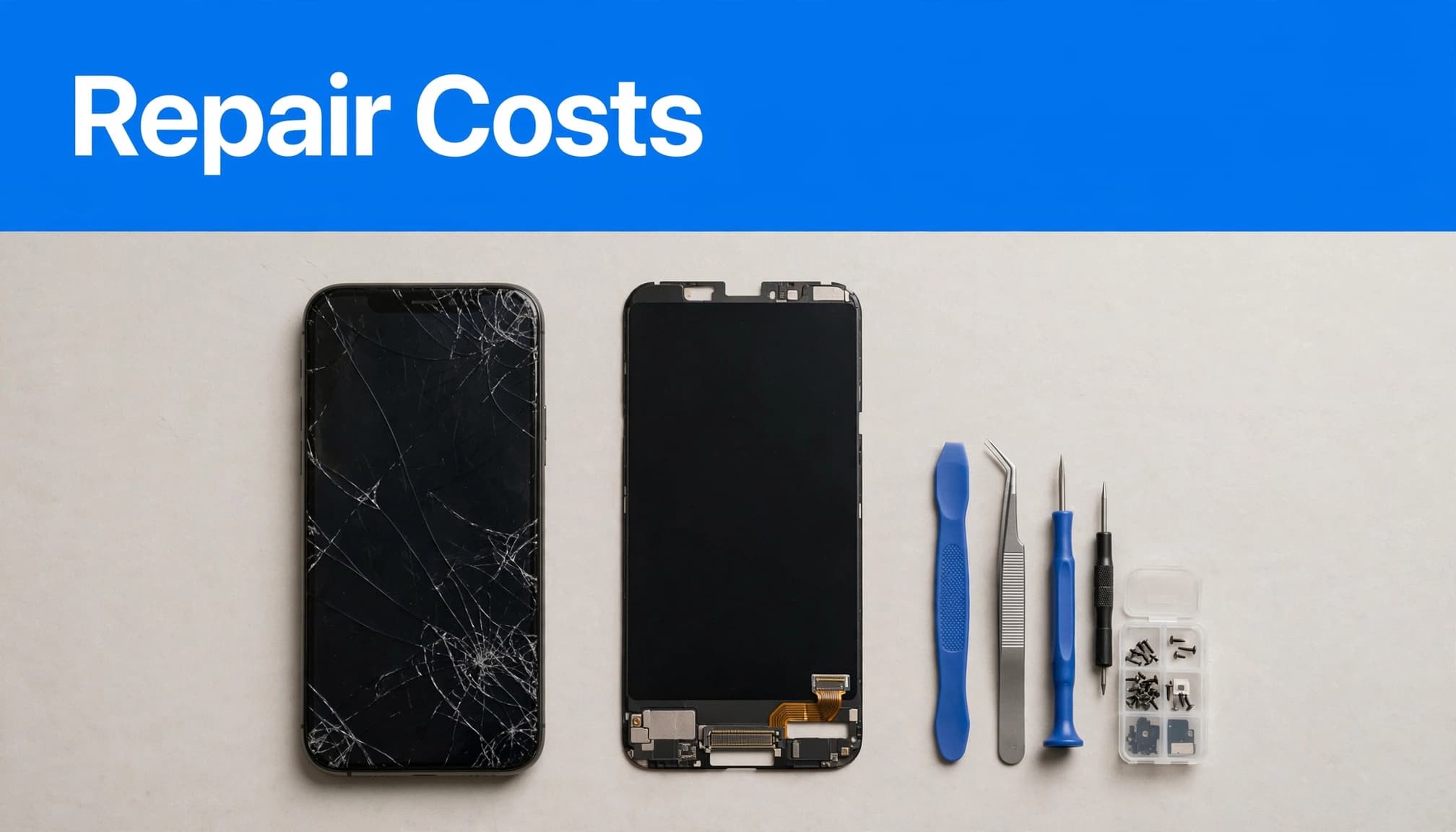
Professional repair routes
For an iPhone screen repair on a newer handset, we favour Apple or an Apple Authorised Service Provider when display quality, calibration and resale value justify the cost. Apple uses genuine Apple parts, whilst authorised providers set their own out-of-warranty fees.
A good independent workshop can offer better value for an older handset. However, “replacement screen” might mean a genuine used display, a refurbished original panel or an aftermarket assembly.
The word “OEM” alone doesn’t explain which you’re buying. A written description of the part, promised functions and warranty gives you something useful if the repair disappoints.
DIY kit costs and risks
iFixit’s screen repair cost guide gives average Screen Fix Kit prices close to $81 for its older-model group and $140 for newer generations. These are US-dollar reference figures, not UK checkout prices or guaranteed savings.
The guide puts repair time at approximately 30 minutes to a couple of hours. A first attempt can take longer.
Your saving depends on the exact kit, UK delivery, taxes and tools already owned. Torn flex cables, damaged sensors or an unsuitable replacement panel can erase it. Opening a phone doesn’t automatically remove every consumer right, but damage caused during DIY work complicates later claims.
LCD, HD and OLED: What Changes the Quote?
Cheaper LCD and “HD” panels
LCD screens generally cost less than OLED assemblies. Older standard and SE-family iPhones often use LCD originally, so a suitable LCD replacement can be a sensible repair.
However, “HD panel” is a marketing description, not a consistent quality standard. UK guides commonly put these budget options around £30 to £50 below OLED alternatives.
On a phone designed for OLED, an LCD conversion can mean greyer blacks, weaker contrast and disappointing outdoor brightness. We wouldn’t pay OLED-level money for that compromise. Ask whether the quote covers an LCD panel or a complete screen assembly.
Why OLED and Pro displays cost more
An equivalent-quality OLED replacement is generally closer to an OLED iPhone’s factory display. Its contrast and brightness matter when watching HDR video or reading maps outdoors.
Pro models with ProMotion 120 Hz displays support adaptive refresh rates up to 120 Hz. Replacements need the right capability to preserve that behaviour. On models that support it, check that the replacement is compatible with Always-On Display.
Apple’s original OLED displays use flexible OLED technology. Hard OLED is an aftermarket construction, not the original specification for every Pro display. Soft OLED uses a flexible substrate, while hard OLED uses a rigid one, which can affect fit and durability.
Our advice on checking replacement screen quality covers brightness, touch response and other differences that a quick power-on test can miss.
AppleCare+, Warranty and Accidental Damage
For eligible screen-only accidental damage, Apple’s UK AppleCare+ fees list a £25 excess. The excess for a covered incident is the same through Apple and Apple Authorised Service Providers.
That doesn’t mean every damaged phone qualifies for the screen-only rate. Additional damage can move the repair into another category.
Apple’s repair service and replacement parts carry a guarantee of 90 days or the remaining manufacturer’s cover term or AppleCare term, whichever lasts longer. This sits alongside your consumer rights.
Independent repair guarantees vary. Their useful detail is what happens if touch response fails, the panel lifts or a display defect appears after fitting.
A refurbished-phone warranty also differs from accidental-damage insurance. A later drop or spill normally falls outside standard fault cover, even when the phone remains within its warranty period.
What We Check Before Resale
Screen performance and Face ID
Our refurbishment screen checks cover touch response, brightness, colour consistency and visible defects. On OLED devices, we also look for image retention and display wear.
For a repaired phone, test typing across the keyboard, edge gestures, automatic brightness and calls with the handset against your ear. Face ID should work repeatedly, rather than passing once.
Depending on the model and replacement assembly, the repair may require transferring original sensor components. Damage to those components can affect Face ID. Screen replacement doesn’t inevitably disable Face ID or True Tone, but careful handling and appropriate calibration matter.
Wider damage and an unsuccessful repair
The glass, touch-sensing digitiser and display form a bonded assembly on modern iPhones. Some specialists can replace glass alone when the underlying image and touch functions remain perfect.
There isn’t a dependable universal percentage separating glass-only jobs from full display replacements. Lines, black patches and dead touch areas need proper diagnosis.
Leaving cracked glass exposed increases the risk of moisture entering or further pressure damaging the layers underneath.
If a replacement develops faults, keep the receipt and record the symptoms. Return it through the repairer’s warranty process before another workshop opens it, unless there’s an immediate safety concern.
Is It Worth Repairing or Replacing an Old iPhone?
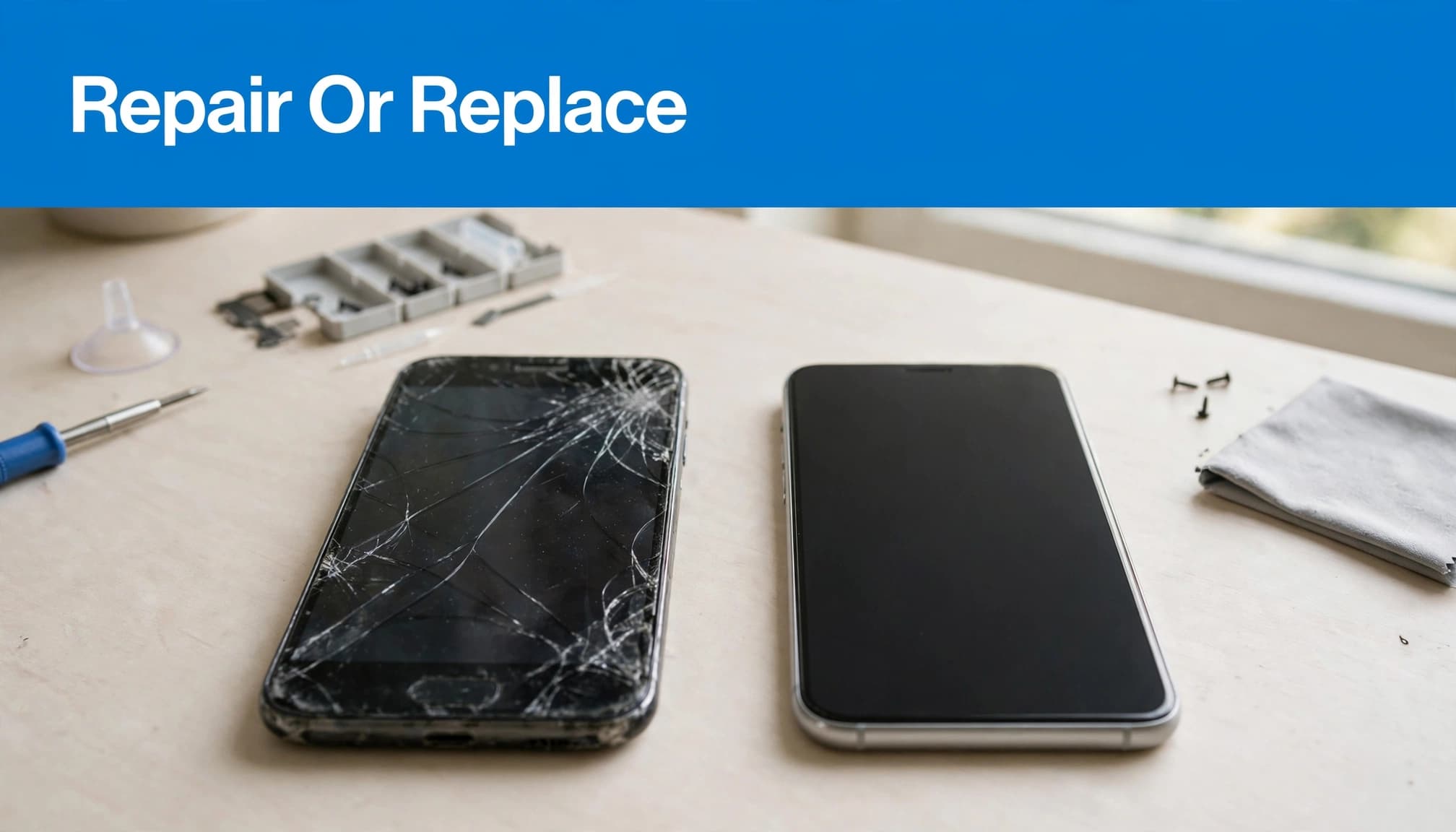
We favour repairing an isolated screen fault when the frame is straight and the rest of the phone remains dependable. For a Pro Max, compare a high screen quote plus any battery, charging-port or camera work with the cost of replacement.
Battery condition matters more than cosmetic grade. Look under Settings > Battery for the battery-health information available on your handset.
If you’re considering a replacement, Grade A usually describes appearance rather than a new battery or untouched internal parts. A refurbished iPhone can perform very well, but remaining lifespan depends on its age, battery condition, repair history and software support.
Our comparison of repair costs versus replacement explains that wider calculation.
Also consider what a refurbished warranty actually covers, alongside returns and network compatibility. Under Settings > General > About, “No SIM restrictions” beside Network Provider Lock indicates an unlocked iPhone.
Back up the damaged handset whilst it still works. If you replace it, complete the data transfer before signing out and securely erasing the old phone.
Repairing before selling only makes financial sense when the increase in realistic sale value exceeds the complete repair bill.
Keep repair receipts and describe replacement parts honestly when selling.
Frequently Asked Questions
Does Apple’s warranty cover a cracked screen?
Apple’s One-Year Limited Warranty covers manufacturing faults for one year. It doesn’t cover accidental damage.
A screen that fails because of a manufacturing issue is different from one cracked during a drop. AppleCare+ provides separate accidental-damage cover, subject to its terms and excess.
Will Face ID work after an independent repair?
It can, provided the relevant hardware remains undamaged and the repair follows the correct process. A third-party display alone doesn’t automatically prevent Face ID working.
Before accepting the phone, test normal Face ID unlocking several times. Also test the front camera, proximity sensor and touch response. Report missing functions immediately.
Can a cheap screen use more battery?
A poor-quality replacement can affect power consumption, although battery age, brightness settings and software also influence endurance.
Uneven colour, weak brightness, flicker and unreliable touch are other warning signs. The lowest quote becomes poor value if daily use suffers or the display needs replacing again.
Should a cracked screen be repaired immediately?
Arrange repair promptly if glass is loose, touch input behaves unpredictably or dark patches spread. Stop using a shedding or lifting screen, and keep the phone away from moisture.
Back up first if you can do so safely. A screen-only repair doesn’t normally require erasing data, but backups protect against problems during any repair.
The Verdict: Compare the Complete Bill
A reasonable iPhone screen replacement cost depends on the whole phone’s condition, not simply its age. We recommend repairing a healthy handset with isolated display damage, especially when AppleCare+ reduces the charge.
When several faults need attention, compare the total with a tested replacement. You can Browse Refurbished iPhones to weigh that alternative without assuming replacement is automatically the better choice.
Looking for a refurbished phone?
Shop professionally tested refurbished iPhones and Samsung phones with 18 month warranty, 30 day returns and free UK delivery.
Browse Refurbished Phones